

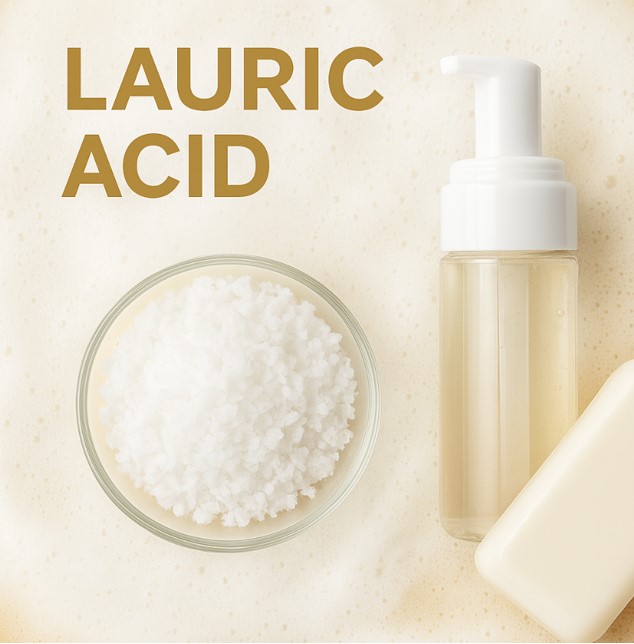
Lauric Acid is a versatile oleochemical with applications in everything from plastics to personal care. Found in numerous plants including the palm tree and cohune palm, as well as in coconut oil, palm seeds, betel nuts and macadamia nuts. Lauric Acid is classified as a saturated fat featuring a 12-carbon atom chain.
Lauric Acid is a white, powdery solid that exhibits a slight odour reminiscent of bay oil or soap. Lauric Acid is non-toxic, making it safe for use in a wide range of applications. Additionally, Lauric Acid is relatively inexpensive, making it a popular ingredient in manufacturing processes where cost is a key consideration.
The various Lauric Acid uses are as follow:
Food and Beverage
One of the more common uses of Lauric Acid is as raw material for emulsifiers in various food and beverage additives, particularly in the manufacturing of vegetable shortening. Its nontoxicity also makes Lauric Acid safe for use in food production.
Surfactants and Esters
When used as anionic and nonionic surfactants, Lauric Acid has the ability to reduce surface tension between liquids and solids.
Textiles
Lauric Acid works well as a lubricant & process agent in textile manufacturing applications, as it has the ability to help water mix with oil.
Personal Care
One of the more common Lauric Acid uses is as an emulsifier for facial creams and lotions, as it possesses a strong ability to cleanse skin and hair. It is also easy to wash away after use. You can find it in many personal care products such as shampoos, body washes and shower gels.
Soaps and Detergents
When used as a base in the production of liquid and transparent soaps, Lauric Acid can control the level of lathering, add conditioning properties and enhance overall cleaning ability.